
AI Automation
AI automation with context, approval, evaluation, and audit.
Teams with repeatable work requiring interpretation, cross-system actions, and human control.
Routine work moves faster without hiding sources, decisions, or failures.
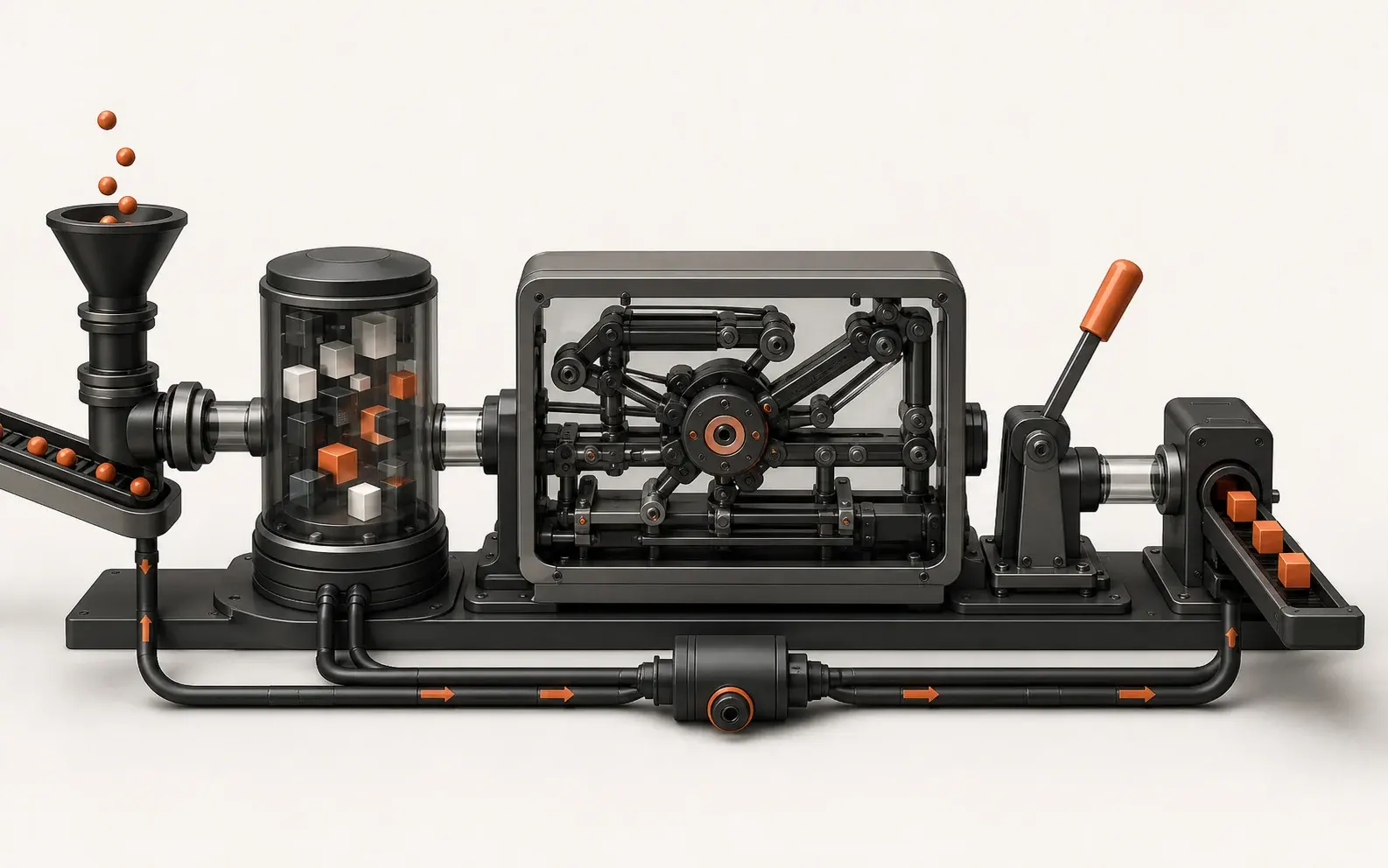
One system, readable at a glance.
Every stage, operational boundary, and checkpoint stays visible in one map.
Context and reasoning
Controlled action
An event, schedule, webhook, or user action starts the workflow.
Features follow the system.
Capability groups keep scope understandable and testable.
Orchestration
Deterministic flow around model capability.
Control before automation.
AI, integrations, data, and human checkpoints form one control plane.
AI and decisions
People define correctness, permitted sources, and action boundaries.
Risky, external, or hard-to-reverse actions require approval.
Integrations
Documents, databases, or search indexes connect with permissions and provenance.
Model providers and tools are selected by need, risk, latency, and cost.
CRM, helpdesk, email, chat, billing, and internal systems become candidate action targets.
System layers
Queues, review inbox, configuration, and understandable status.
Orchestrator, retrieval, tool registry, policies, and evaluation.
Traces, audit, prompt versions, evaluation datasets, and observability.
The foundation comes first.
Delivery outputs and roadmap form a build sequence, not a promise list.
Outputs you keep
Workflow map and risk boundaries
Tool contracts and permission model
Evaluation set and approval experience
Codebase, traces, observability, deployment, and runbook
Foundation
- One measurable workflow with validation and audit
- Human approval, retry, fallback, and observability
Optional
- Multi-model routing and additional tools
- Batch processing and priority queues
Coming soon
- Continuous evaluation with approved datasets
- Evidence-based workflow optimization